

Ask anyone who has managed rentals in a college town long enough and they will tell you the same thing: the calendar matters as much as the market. National rent reports track inflation, interest rates, and construction pipelines, but in College Station the bigger driver, month to month, is simply where the university is in its academic year. Rent here does not move in a straight line. It rises and falls on a fairly predictable seasonal rhythm, and understanding that rhythm is one of the most useful things a renter or a property owner can know.
This week's guide walks through how rents typically shift from the fall move-in surge through the quieter summer stretch, and what that pattern means depending on which side of the lease you're on.
The Shape of the Rental Year
College Station's rental market follows the academic calendar closely enough that its ups and downs are fairly easy to map out. Demand climbs through the summer, peaks hard around the fall move-in window in August, eases through the semester, dips to its lowest point in the winter, ticks up briefly in January as spring-semester students arrive, and then quiets again heading into late spring. Citywide data backs this up directly: average rents in College Station typically run about 3.4 percent higher during the peak summer and move-in months than during the slower winter stretch. That may sound modest, but on a $1,791 average rent, it is the difference between a market that favors the property owner and one that favors the renter.
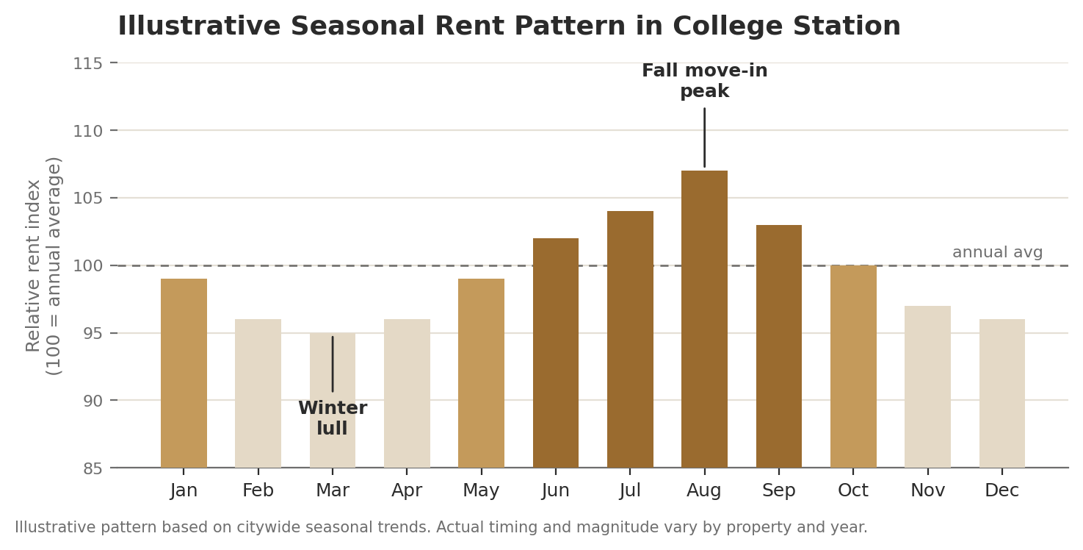
Illustrative seasonal pattern based on citywide rent trend data. Actual timing varies by property.
The Fall Surge
Late August is, without question, the busiest and most competitive stretch of the year. Tens of thousands of students move in within roughly a two-week window, and demand for one-bedrooms and shared houses near campus spikes accordingly. Inventory near Northgate, Southside, and Eastgate tends to thin out fast, and units that would sit on the market for a few weeks in the spring can lease within days in late July and August.
This is also when asking rents tend to run highest. Property owners who list in the six to eight weeks before fall move-in are working with the least competition from other vacancies and the most urgency from renters, which is exactly the combination that supports stronger pricing. It is worth noting this surge overlaps with the start of football season, which adds its own short bursts of demand for short-term and game-weekend housing on top of the standard leasing rush.
The Winter Lull and the January Bump
Once the fall semester settles in, the market cools noticeably. November and December bring the slowest leasing activity of the year, driven partly by the holidays and partly by the simple fact that most students who needed housing already found it back in August. This is the stretch where average rents sit at their lowest point of the year citywide.
There is a smaller, secondary bump in January tied to the spring semester: transfer students, new graduate admits, and renters who are changing situations after a fall lease ends. It is real demand, but it is a fraction of the size of the August surge, and it tends to pass quickly once the first few weeks of the spring semester are underway.
Summer: The Best Window for Renters
May and early summer bring the year's biggest wave of move-outs, as leases tied to the spring semester end and students head home or transition between housing. This creates a window, roughly May through mid-July, where inventory is relatively high and competition from other renters is relatively low, even though citywide summer averages can look elevated in the aggregate data because so much leasing activity is concentrated in this period ahead of the August surge.
For a renter with real flexibility on move-in date, this stretch is generally the easiest time to negotiate, whether that means a lower rate, a waived fee, or more flexibility on lease start dates. Property owners see it differently: it is the period where marketing a vacancy well and pricing it realistically matters most, since units that sit unfilled through June and July often end up competing directly with the August rush instead of getting ahead of it.
What This Means for Renters
- If flexible on timing, target a May or June move-in rather than competing directly with the August surge.
- Expect the least competition and the most negotiating room in November and December, if a mid-year move works.
- Start looking in June for an August move-in. Waiting until late July often means picking from what's left.
- Don't assume January is a bargain season. It's quieter than August, but tighter than most of the summer.
What This Means for Property Owners
The same calendar that shapes renter strategy shapes leasing strategy on the ownership side. Listing a vacancy six to eight weeks ahead of the fall surge generally captures the strongest pricing and the largest pool of prospective tenants. Units that come open in October or November often do better priced competitively and marketed toward the smaller pool of mid-year movers rather than held at peak-season rates while sitting vacant. Owners working with a property manager typically have listings timed against this calendar automatically, which is one of the more overlooked advantages of not managing turnover alone.
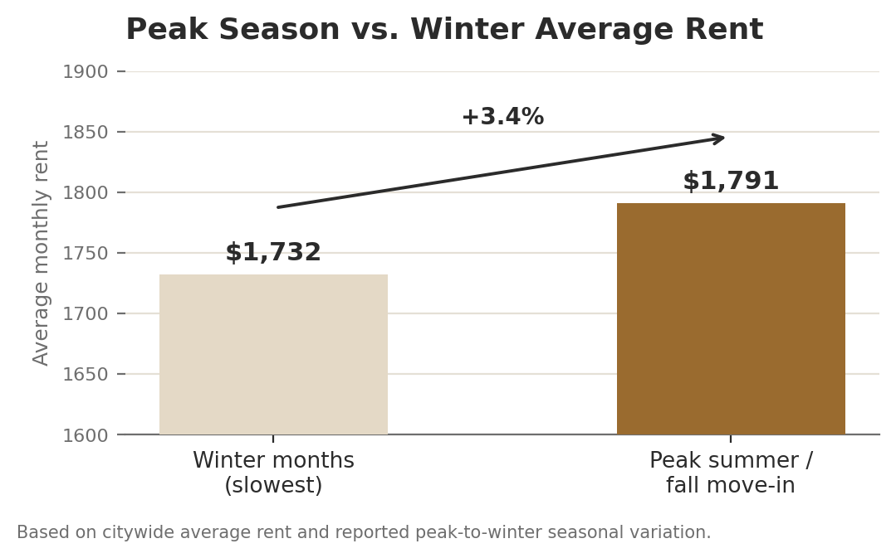
Based on citywide average rent and the reported peak-to-winter seasonal variation.
Frequently Asked Questions
When are rents highest in College Station?
Rents typically peak in the weeks surrounding the fall move-in window in August, when demand from incoming and returning students is at its highest and available inventory is at its lowest.
When is the best time to find a deal on rent in College Station?
November and December tend to have the softest pricing and least competition, with late spring through early summer offering more inventory for renters flexible on move-in date.
How much do rents actually change between seasons?
Citywide data shows roughly a 3.4 percent difference between peak summer and move-in season pricing and the slower winter months, which translates to real savings on an average lease.
Does Strago help owners time listings around these seasonal shifts?
Strago manages rental properties on behalf of owners across College Station, including Southside, Eastgate, Wolf Pen Creek, and the East Medical District, and factors the academic calendar into how and when vacancies are marketed.
Next week, we're looking at why good tenants actually renew, and it's rarely about the rent price. We'll break down the maintenance response times, communication habits, and small property management decisions that quietly decide whether someone re-signs in March or starts browsing listings again the moment their lease allows it. In the meantime, the Strago team is glad to help with anything you are working through. Reach out anytime at stragopm.com.