
For years, selling a home in Bryan-College Station meant multiple offers, quick closings, and buyers with little room to negotiate. That's no longer the market. New data released this month shows the tables have turned, and the ripple effects reach a lot further than home sellers alone.
The Numbers Behind the Shift
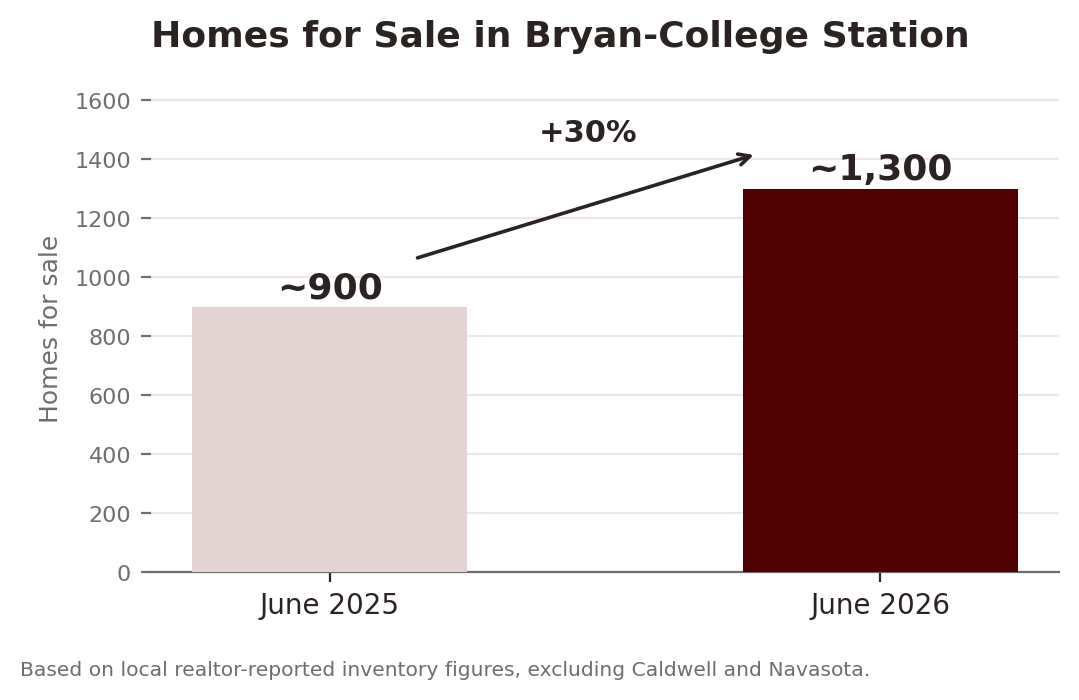
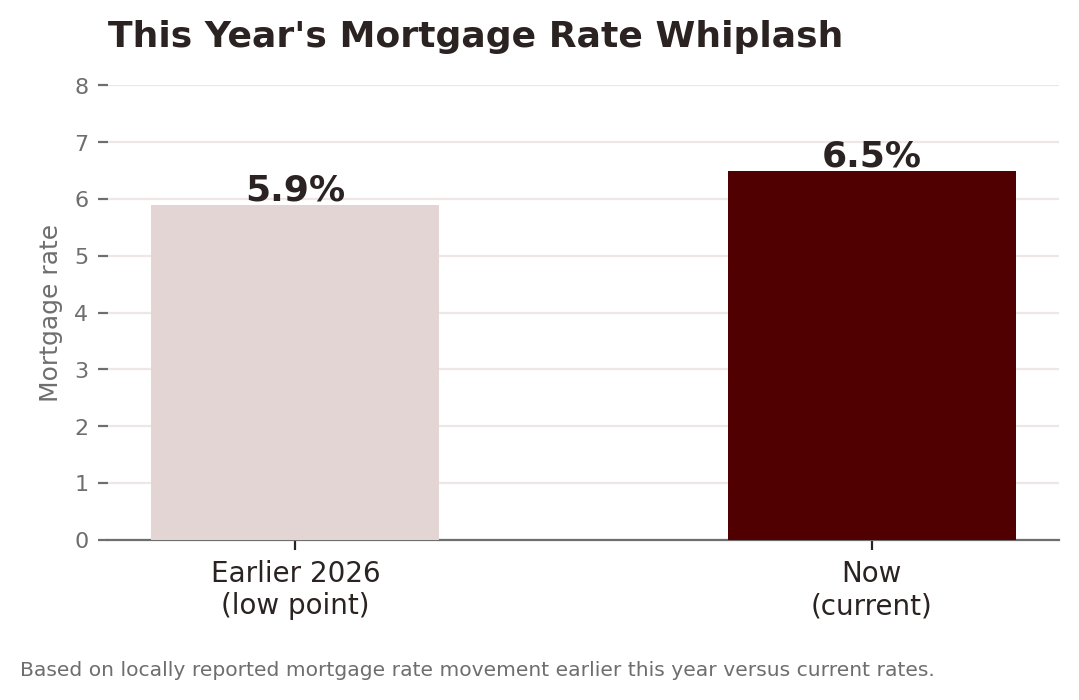
There are roughly 1,300 homes for sale right now across Bryan-College Station, excluding Caldwell and Navasota, about 30 percent more than the roughly 900 homes on the market at this point last year. Homes that sold in July sat on the market for an average of 90 days before closing, a sharp increase from prior years. Mortgage rates added their own whiplash: they dipped to 5.9 percent earlier this year before climbing back to 6.5 percent, cooling seller momentum even during what's normally the busiest season.
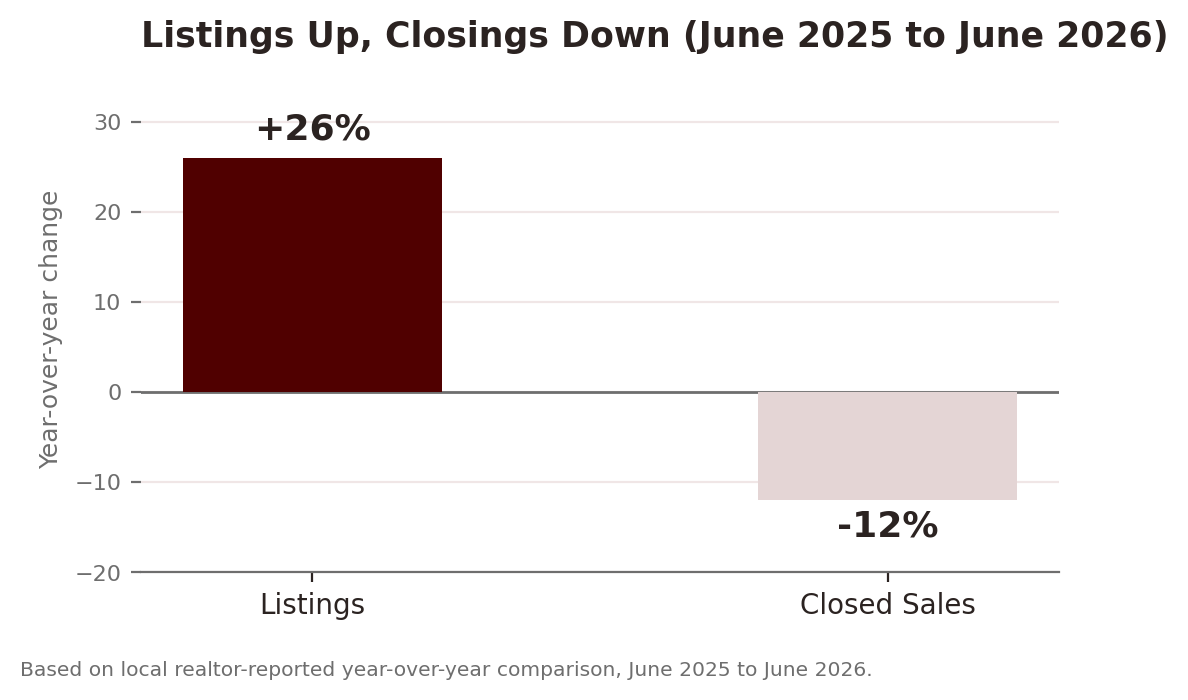
Comparing June 2025 to June 2026 tells the same story from a different angle: listings are up 26 percent year over year, while closed sales are down 12 percent. More homes are hitting the market, and fewer of them are actually selling.
Realtors Are Calling It a Real Shift
Local agents describe this as the end of an extreme, multi-year seller's market that followed the pandemic housing boom. A Texas A&M Real Estate Research Center economist attributes the shift to two things happening at once: slower buyer activity and a wave of new sellers listing at the same time. Multiple Bryan-College Station realtors describe the current conditions as a genuinely balanced market rather than a downturn, the first time in years that inventory has climbed above six months of supply.
Not every buyer is feeling relief equally. Entry-level buyers, a meaningful share of the market in a city with a young, university-driven population, are being squeezed hardest, not primarily by home prices, but by rising insurance and property tax costs layered on top of still-elevated interest rates.
Then vs. Now
| June 2025 | June 2026 |
|---|---|
| ~900 homes for sale | ~1,300 homes for sale (+30%) |
| Faster average time on market | 90+ days average time on market |
| Listings roughly flat year over year | Listings up 26% year over year |
| Higher closed sales volume | Closed sales down 12% year over year |
The Accidental Landlord Effect
When homes sit for 90 days instead of selling in a couple of weeks, some owners who planned to sell decide to rent instead, either to wait out a softer market or to avoid dropping their asking price. That shift doesn't show up in housing headlines, but it quietly adds new, often well-maintained, well-located single-family homes to the rental pool, properties that were never built or bought to be rentals in the first place.
Why More Renters Are Staying Renters
At the same time, the buyers most squeezed by rising insurance and property tax costs, disproportionately younger, first-time buyers in a market like this one, are the same people who might otherwise be exiting the rental pool to buy. When that transition slows down, rental demand doesn't shrink. It holds steadier than the sales headlines might suggest.
Put those two effects together, and a cooling sales market doesn't necessarily mean a cooling rental market. It can mean more rental supply and more rental demand showing up at the same time, which changes the calculus for existing landlords in ways that are easy to miss if you're only watching home sale prices.
What This Means for Landlords
- Expect more competition from newly listed rental properties, including homes originally intended for sale.
- Entry-level renters priced out of buying by insurance and tax costs may stay in the rental pool longer than in past years.
- A softening sales market doesn't automatically mean softening rents. Watch actual rental listings and days-on-market, not home sale headlines.
- Owners considering selling into a slow market may want to weigh renting instead, at least temporarily, rather than accepting a lower sale price.
Where Strago Fits In
Whether you're weighing a sale against renting a property out in this shifting market, or you're already a landlord watching new competition enter the rental pool, Strago Properties is glad to help you think through the numbers. We manage traditional and short-term rentals across College Station, Bryan, and Navasota, with Grimes County also part of our service area.
Frequently Asked Questions
Is Bryan-College Station really a buyer's market now?
Local inventory has climbed above six months of supply for the first time in years, and homes are taking significantly longer to sell, both signs of a market that has shifted meaningfully toward buyers.
Does a slower home sales market mean rents will drop too?
Not necessarily. Slower home sales can push some would-be sellers into renting instead and keep some would-be buyers renting longer, which can support rental demand even as the sales market cools.
Should I sell my property or rent it out in this market?
It depends on the property and your timeline, but with homes taking an average of 90 or more days to sell, renting is worth evaluating as a serious alternative to accepting a lower sale price.
Does Strago help owners decide between selling and renting a property?
Yes. Strago Properties is glad to help owners across College Station, Bryan, Navasota, and Grimes County think through whether selling or renting makes more sense in the current market.
Weighing whether to sell or rent a property in this market? The Strago team is glad to help you think it through. Reach out anytime at stragopm.com.
Integrity First. Family Owned. Aggie Built.
Strago Properties | stragopm.com